
The year began with a figure that sent a ripple through boardrooms and engineering labs alike: the global market for industrial robot installations has crested at an all-time high of US$16.7 billion. While growth was anticipated, the sheer velocity of this expansion caught many analysts by surprise. The narrative of robotics is no longer a distant future forecast; it’s a present-day reality defined by machines that are not just automating tasks, but are beginning to operate with a startling degree of autonomy.
Factories and warehouses are grappling with persistent labor shortages and the relentless pressure to increase efficiency. The old model of static, single-task automation is proving insufficient for the dynamic demands of modern supply chains. This pressure is accelerating a fundamental shift, moving beyond simple mechanical repetition towards integrated, intelligent systems that think, learn, and adapt in real-time.
From Automation to True Operational Autonomy
The most significant leap in 2026 isn’t just about more robots, but smarter ones. The transition from rule-based automation to genuine autonomy is being supercharged by a confluence of AI technologies. This isn’t a single breakthrough but a layered approach to intelligence. Analytical AI sifts through vast operational datasets to predict maintenance needs and optimize logistics, while Generative AI is enabling robots to learn new tasks through simulation, dramatically reducing programming time.
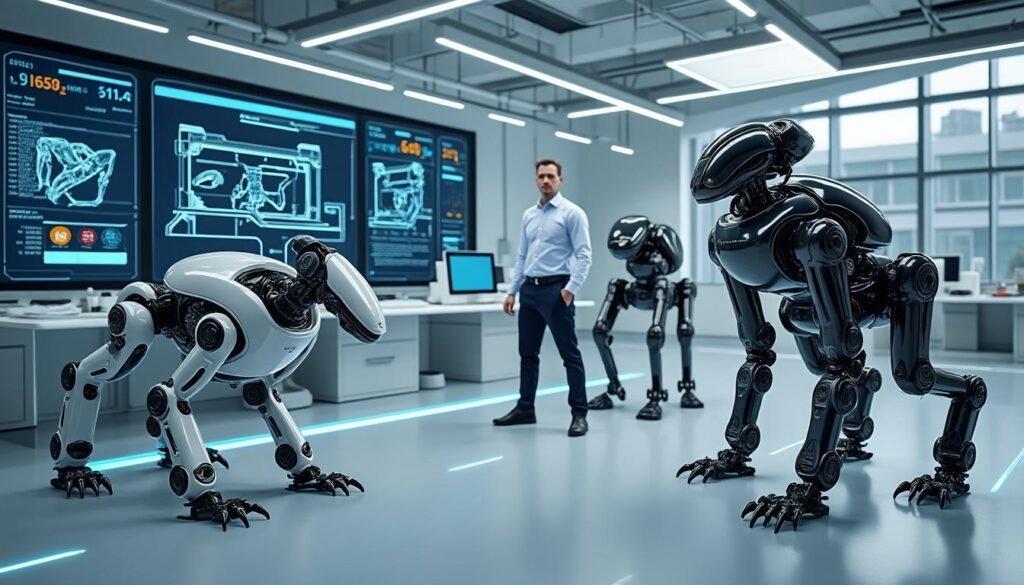
The cutting-edge trend, however, is the rise of Agentic AI. This hybrid model combines analytical and generative capabilities, allowing robotic systems to make independent decisions in complex, unpredictable environments. This shift is turning robots from tools into self-sustaining systems. We’re now seeing intelligent base stations that automatically handle battery charging, tool cleaning, and fluid replenishment, allowing robots to operate for extended periods with minimal human oversight. This changes the entire economic equation of automation, making it vastly more scalable.
The Convergence of IT and OT: A New Digital Nervous System
For decades, Information Technology (the world of data and software) and Operational Technology (the physical world of factory floor machinery) existed in separate silos. That wall is now crumbling. The convergence of IT and OT creates a seamless feedback loop where real-time data from the physical world informs digital decision-making, which in turn directs physical actions with greater precision. This integration is the backbone of Industry 4.0.
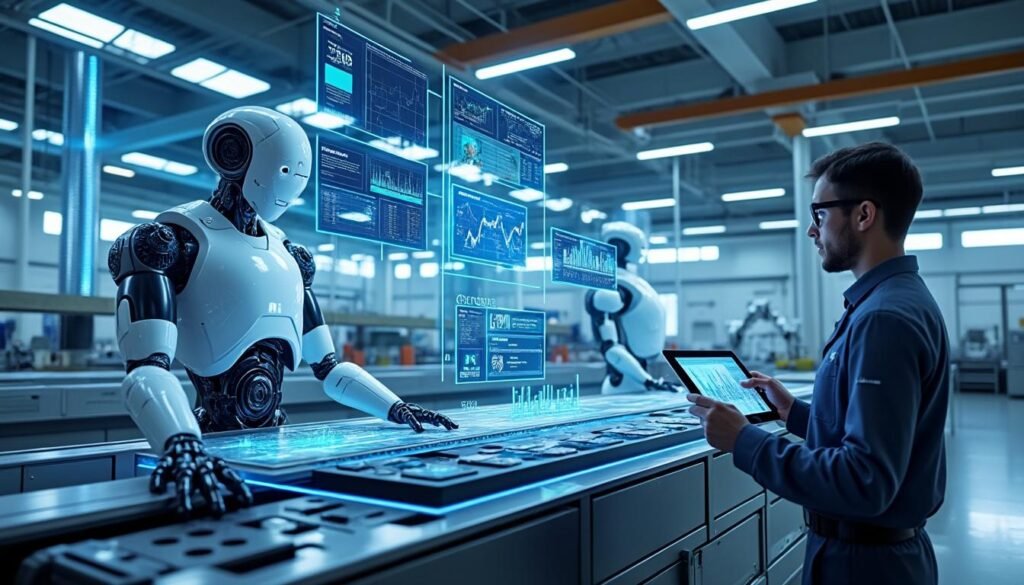
This digital-physical fusion gives robots unprecedented versatility. A robot is no longer just a standalone machine; it’s a node in the factory’s larger digital nervous system. It can communicate with inventory systems, access cloud-based analytics, and coordinate its actions with other machines, creating a truly smart factory environment. The broader context for this evolution can be understood by looking into the roadmaps of major AI labs, which heavily influence robotic capabilities.
Humanoids: The Reality Behind the Hype
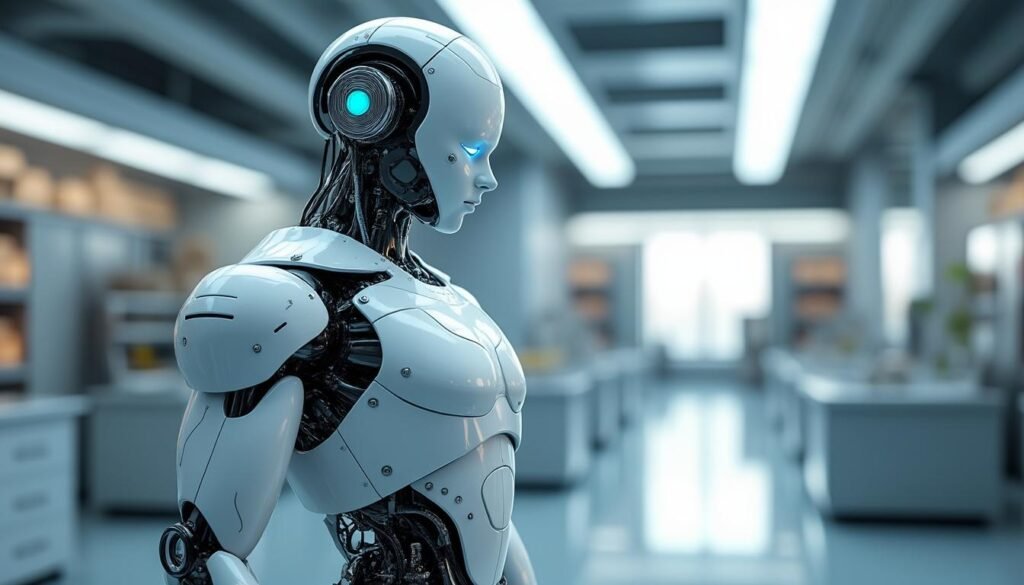
No area of robotics has captured the public imagination quite like humanoids. Following their first meaningful commercial deployments in 2025, these machines are now a central topic of discussion. The promise is immense: a robot designed to operate in environments built for humans, capable of tackling a wide range of tasks without requiring a complete redesign of the workspace. Industries from automotive to logistics are keenly watching as these bipedal workers move from lab demonstrations to real-world pilot programs.
However, 2026 is also a year of pragmatic assessment. While the progress is undeniable, broad commercial deployment at scale remains on the horizon. The primary challenges are no longer just about mobility or dexterity, but about industrial-grade reliability and efficiency. To be viable, a humanoid must not only perform a task but do so with the speed, consistency, and low maintenance cost of traditional automation. As noted in recent analyses of factory floor deployments, proving their economic value and safety over long periods is the next great hurdle.
Chips and Vision: The Unseen Engines of Progress
While the metallic frames of robots get the attention, the real revolution is happening at the microscopic level. Advances in specialized AI chips and onboard compute power are unlocking new capabilities. More powerful, energy-efficient processors allow robots to run complex perception and decision-making models locally, reducing the latency and unreliability of cloud dependence. This is critical for machines operating in the physical world where millisecond decisions matter.
Among all software advancements, computer vision is proving to be the most decisive capability. Robots are increasingly able to understand and navigate environments designed for humans, recognizing obstacles, interpreting signage, and adapting to layout changes without needing artificial markers. Better vision directly translates to safer operation, more efficient task execution, and a dramatic reduction in the time and cost of deployment.
Addressing New Frontiers: Security and the Labor Gap
As robots become more intelligent and connected, they also become new targets. The integration of IT and OT exposes industrial operations to a growing spectrum of cybersecurity threats. Hacking attempts targeting robot controllers or cloud platforms are on the rise, creating risks of system manipulation or data theft. Furthermore, the “black box” nature of some deep learning models raises complex questions of liability and governance, prompting calls for clearer international standards.
Simultaneously, robotics is emerging as a critical ally in tackling global labor shortages. Automation is stepping in to fill roles that companies are struggling to hire for, reducing the strain on existing employees. To ensure a smooth transition, leading companies are focusing on upskilling programs and involving their human workforce directly in the implementation process. The key benefits driving this adoption are clear:
- Tackling labor shortages: Robots perform repetitive or physically demanding tasks, freeing up human workers for more complex roles.
- Improving workplace safety: Automation takes over dangerous jobs, reducing accidents and injuries.
- Enhancing job appeal: Modern, high-tech work environments are more attractive to a new generation of talent.
- Opening career paths: The need for robot technicians, programmers, and fleet managers creates new, higher-skilled job opportunities.
This evolution is detailed in reports from leading organizations like the International Federation of Robotics, which highlight how automation is becoming essential infrastructure. The goal is no longer just to replace, but to collaborate, with robots and humans working together to achieve higher levels of productivity. According to experts like Elad Inbar, the focus for 2026 is on making robots dependable, not just experimental, which is where the next wave of value will be unlocked, as outlined in his predictions for the year ahead.
What is the biggest trend driving industrial robotics in 2026?
The primary trend is the shift from simple automation to true autonomy, powered by advancements in AI. Technologies like Agentic AI, combined with self-sustaining hardware systems, are enabling robots to operate independently for longer periods with less human intervention.
Are humanoid robots widely used in factories now?
While humanoid robots are seeing their first significant commercial deployments and pilot programs in 2026, they are not yet widely used at scale. The industry is currently focused on proving their long-term reliability, safety, and economic efficiency compared to traditional automation solutions.
What does the convergence of IT and OT mean for robotics?
The convergence of Information Technology (IT) and Operational Technology (OT) means that factory robots are no longer isolated machines. They are now integrated into a larger digital ecosystem, allowing them to exchange data with other systems in real-time. This enhances their versatility, enables advanced analytics, and improves overall factory efficiency.
How are robots helping with labor shortages?
Robots are addressing labor gaps by taking on repetitive, physically demanding, or undesirable tasks that companies struggle to fill. This allows human employees to be upskilled for more complex and valuable roles, such as robot maintenance, programming, and fleet management, while also improving workplace safety.