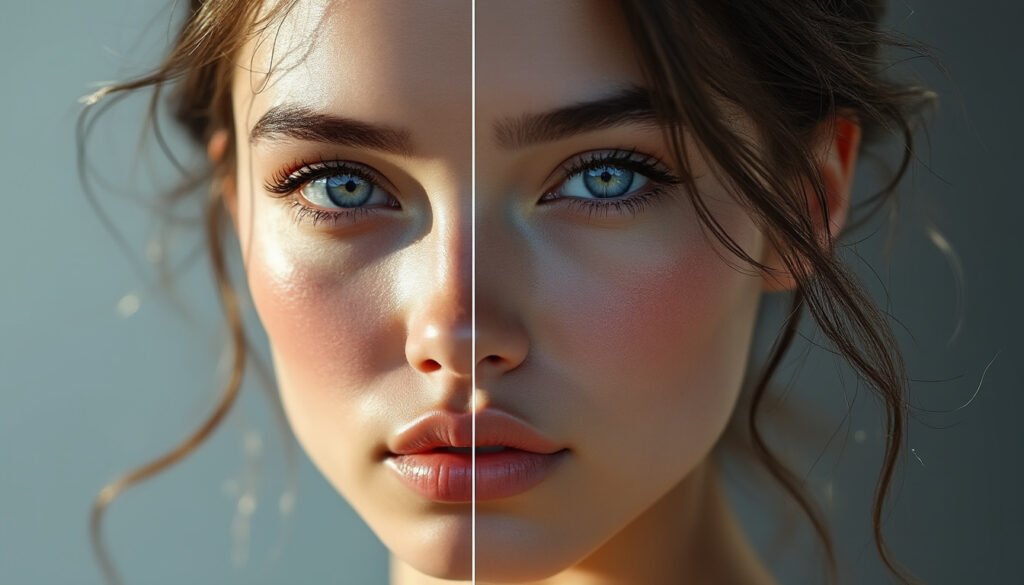

The lingering discomfort of the “uncanny valley” has long plagued generative video, subtly undermining trust and engagement for marketers and creators alike. This wasn’t merely a matter of minor glitches; it represented a fundamental barrier to achieving authentic connection and producing professional-grade content. The risk of damaging brand perception or alienating an audience loomed large, making many cautious about the boundless promise of AI-driven video. Yet, recent advancements, particularly in model sophistication and a refined understanding of creative direction, suggest that the industry has turned a significant corner. It’s no longer just about rendering better pixels; it’s a profound leap in achieving coherence and the critical realization that human craft elevates AI, allowing generative video to finally move beyond its most unsettling, artificial phase.
The persistent shadow: Understanding the traditional uncanny valley in AI video
Historically, the term “uncanny valley,” coined by robotics professor Masahiro Mori, described the eerie feeling viewers experienced when an artificial entity looked almost human but displayed subtle, disturbing flaws. In early generative video, this translated into unsettling experiences for audiences. The primary culprits were often a profound lack of temporal coherence, where characters or objects would inexplicably morph from one frame to the next, and an insufficient grasp of real-world physics, leading to unnatural movements. Viewers would encounter artifacting, such as waxy skin textures, hands with an incorrect number of fingers, or avatars struggling to maintain realistic eye contact, all contributing to a sense of unease that eroded brand trust and viewer engagement before any message could truly land. These fundamental failures in consistency and realism made AI-generated human presenters feel distinctly “off,” preventing genuine emotional connection.
Emergent realism: How advanced models are bridging the gap in 2026
The landscape of generative video has seen remarkable evolution in the past year, with advanced models now making significant strides in overcoming these long-standing visual obstacles. Tools like OpenAI’s Sora 2, for instance, have showcased an astonishing leap in fidelity and spatial coherence, interpreting complex prompts with unprecedented accuracy. These advancements are directly addressing the core issues that defined the uncanny valley. Temporal consistency, a major hurdle where elements would flicker or change inconsistently, is now significantly improved, allowing characters and objects to maintain their attributes and forms across an entire sequence. The models also exhibit a more sophisticated understanding of physics simulation, leading to more believable movements and interactions within a scene, even if not yet flawlessly replicating every nuance of gravity or fluid dynamics.
Furthermore, the refinement of finer details, such as more natural lip-syncing and a greater range of subtle facial expressions, has dramatically reduced the prevalence of jarring artifacts. This crossing of the uncanny valley isn’t about achieving universal, indistinguishable-from-reality perfection in every frame; rather, it signifies a critical reduction in the pervasive “offness” that once defined AI video. Hybrid approaches are also contributing, as seen with platforms like Invideo, which combine generative AI with real stock footage, creating a blend that leverages the best of both worlds to produce more authentic and coherent visual narratives. This fusion is a testament to the diverse strategies emerging to enhance digital realism.
Beyond visuals: The rise of the “boredom valley” in perfect avatars
While the technical glitches are receding, a new, more insidious challenge has emerged, aptly termed the “boredom valley” by industry observers like Colin Melville, head of AI film at Inizio. Melville argues that while AI avatars can now be technically flawless, the industry risks creating content that is “unwatchable” due to a lack of creative direction. The initial awe at photorealistic generation has sometimes overshadowed the fundamental principles of engaging storytelling. For instance, many AI avatar videos default to a static, perfectly lit talking head delivering a monologue for minutes on end. This format, while efficient and scalable, clashes directly with basic film theory, where cuts, reaction shots, and changes in angle are routinely employed to maintain audience interest.
The irony is that as the technical barrier to entry evaporates, the creative one intensifies. A visually perfect avatar that acts like a newsreader, devoid of dynamic interaction or narrative pacing, feels robotic not because of rendering flaws but due to lazy filmmaking. The digitizing of a likeness might remove production friction, but it mercilessly exposes a weak idea or a poorly conceived narrative. The challenge has shifted: it’s no longer about making the avatar look real, but about making its performance feel authentic and its story compelling.
Directing digital talent: Injecting human craft into generative scenes
To truly leverage the capabilities of generative video beyond mere technical showcases, creators and marketers must adopt a mindset of directing digital talent rather than simply generating pixels. The emphasis needs to shift towards treating AI output not as a final product, but as raw footage requiring a human touch. One key strategy involves writing scripts specifically for the edit, focusing on visual dynamism rather than relying on an avatar to carry an entire scene. This means actively planning for cutaways, incorporating high-quality B-roll footage to illustrate points, and meticulously designing soundscapes that underscore emotional beats that an AI-generated face might miss.
Pacing also becomes paramount. Introducing natural pauses and varying the rhythm of delivery can make an AI’s performance feel organic, rather than algorithmically predictable. Furthermore, the notion of “imperfection” gains new importance. While earlier efforts focused on eradicating every glitch, human connection often thrives on subtle nuances—a momentary stutter, a glance away, or even a slightly jarring camera angle can paradoxically enhance realism and emotional resonance. These elements, when intentionally introduced, compensate for AI’s current inability to improvise or react to an unseen “room.” Human creatives are thus transforming into directors of AI, using the established language of cinema to inject soul and authenticity into the generated output, ensuring the story captivates an audience, not just the technology behind it.
Strategic application: When to embrace and when to exercise caution with AI video
Understanding the evolving capabilities and lingering limitations of generative video is crucial for professionals navigating the landscape of 2026. While the benefits of AI video creation are undeniable for certain tasks, it is not yet a universal replacement for all video production. Strategic application is key.
| Best use cases for generative video (2026) | High-risk scenarios for generative video (2026) |
|---|---|
| Rapid prototyping and storyboarding | Flagship brand advertisements where brand perception is paramount |
| Internal training videos and communications | Product demonstrations requiring absolute physical accuracy and detail |
| Conceptual animations and abstract visuals | Content demanding precise, nuanced emotional expression and human interaction |
| Transforming audio podcasts into simple visual formats (audiograms) | Situations requiring 100% copyright and ethical guarantees for commercial distribution |
For instance, generative video excels when crafting conceptual animations where realism is not the primary objective, or for developing internal communication videos and initial storyboards where speed and cost-efficiency outweigh absolute perfection. It’s also highly effective for repurposing existing audio content, like podcasts, into visually engaging audiograms, or for generating B-roll footage where minor inconsistencies will not derail the overall message.
Conversely, extreme caution is advised for flagship brand advertisements where the quality and trust are paramount. Any subtle uncanny valley effect or coherence issue could damage a brand’s reputation. Similarly, product demonstrations that demand absolute physical accuracy and realism, or content requiring precise, nuanced control over character emotions and specific actions, are best handled through traditional production methods. Ethical and copyright concerns also remain significant, especially for commercial distribution, where the opaque datasets used in training models can pose unforeseen legal risks. In these high-stakes scenarios, the traditional approach often remains the safer and more reliable choice. To stay informed on the broader implications, readers can explore resources such as the state of generative media in 2026, which delves deeper into the landscape of AI-powered creative tools.