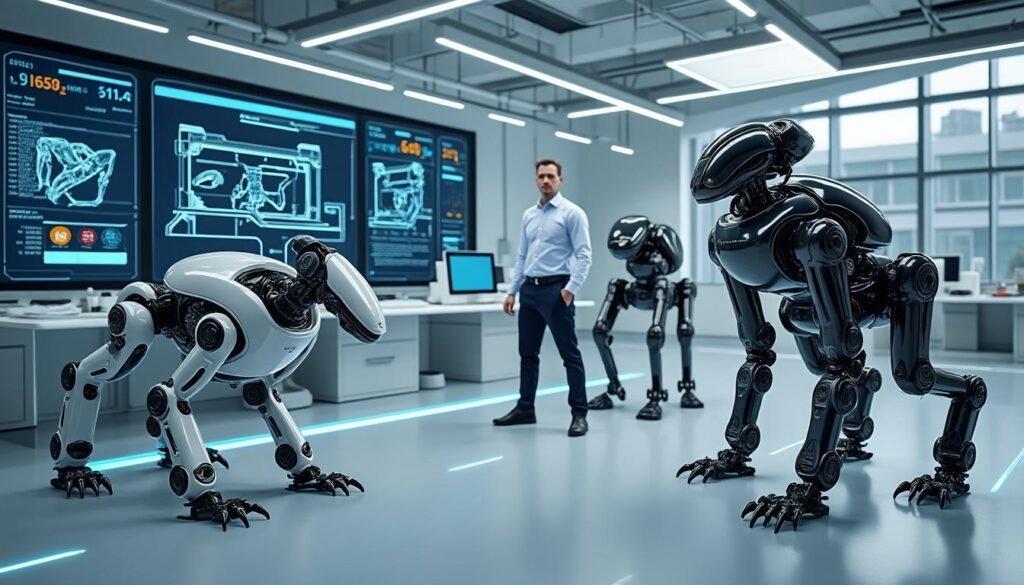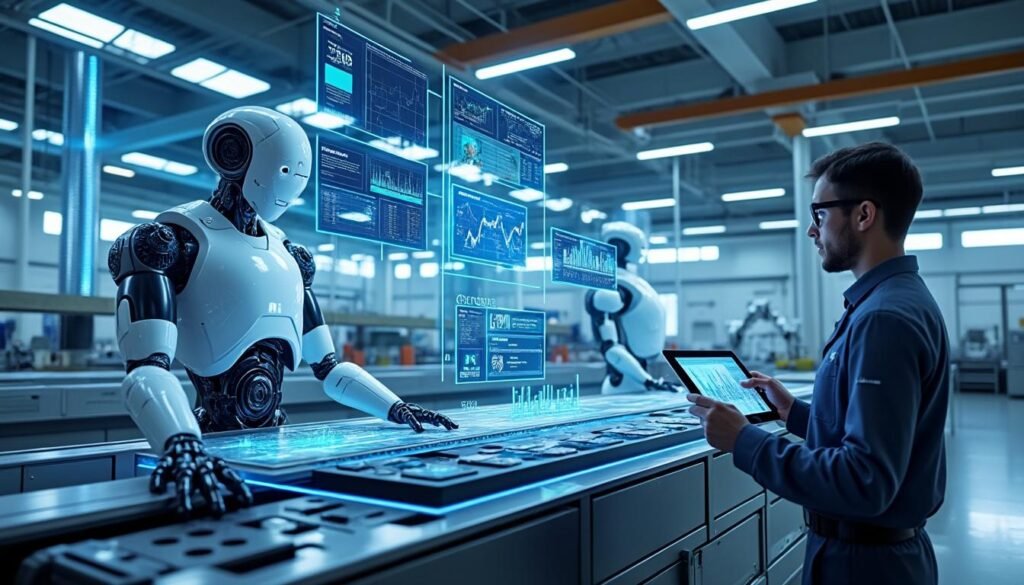
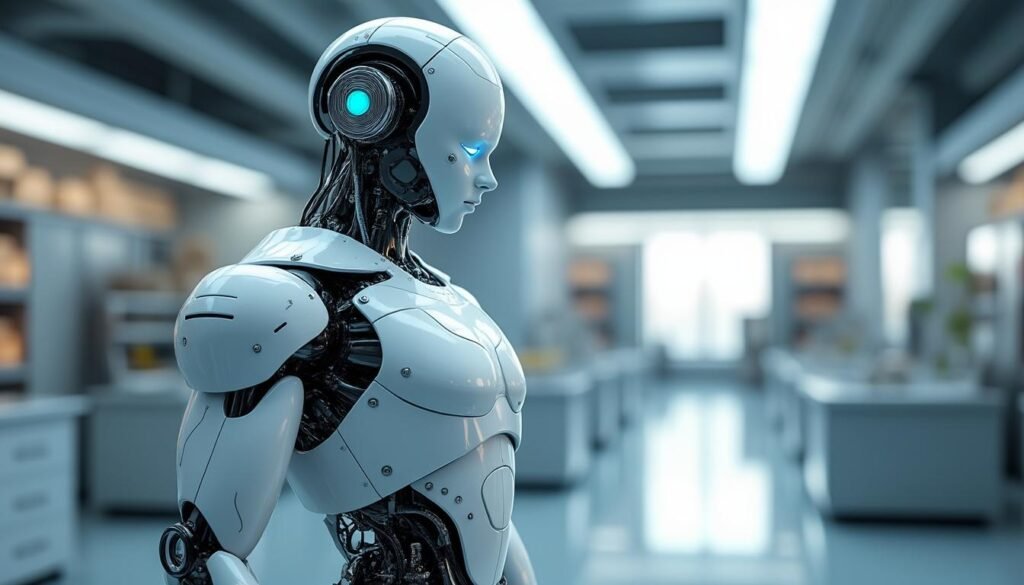

The gentle hum of articulated joints and the whir of advanced servomotors are no longer confined to cinematic soundstages. A new race has begun, not on a track, but on factory floors and in research labs. This is the race to build the first truly general-purpose humanoid robot, and a trio of ambitious companies—Figure, 1X, and Apptronik—are sprinting ahead, each with a unique vision for the future of automated labor.
For decades, the concept of a bipedal robot capable of mimicking human tasks was a distant dream. The engineering challenges were immense, from dynamic balancing to fine motor control. But recent breakthroughs in artificial intelligence, coupled with more efficient hardware, have ignited a fierce competition, transforming science fiction into an imminent reality.
The stakes are astronomical. The company that successfully cracks the code for a versatile, scalable, and affordable humanoid will not just dominate a new market; it will redefine the very nature of work and productivity. These three frontrunners represent the cutting edge of this revolution, each a marvel of engineering poised to leave a permanent mark on history.
Figure AI: The Pursuit of Human-like Grace
Emerging from stealth with astonishing speed, Figure AI has captured the industry’s imagination with its robot, Figure 01. The design philosophy is clear: create a form that is fundamentally human in its proportions and movements. This approach is not merely aesthetic; it’s a strategic bet that a robot built to navigate our world must move like us to use our tools and traverse our spaces effectively.
The collaboration with OpenAI has been a game-changer, imbuing Figure 01 with advanced visual reasoning and language understanding. The robot doesn’t just follow pre-programmed commands; it observes, learns, and communicates. Watching it make a cup of coffee, responding to verbal cues and correcting its own minor errors, feels like witnessing a new form of intelligence taking its first steps.
The OpenAI Integration Advantage
Powering Figure 01’s brain with large language and vision models gives it an unparalleled ability to process and act on unstructured commands. Instead of programming a specific “pick up the red block” task, an operator can simply say, “tidy up this workspace.” The robot then identifies objects, understands the goal, and formulates a plan to execute it. This leap from rigid automation to dynamic problem-solving is what sets Figure apart.
1X Technologies: The Pragmatic Push for Scale
While Figure pursues human-like elegance, Norway’s 1X Technologies, backed by OpenAI investor Sam Altman, takes a decidedly pragmatic approach with its android, NEO. The design is simpler, trading some human-like dexterity for robustness and ease of manufacturing. 1X is not just building a robot; it’s building a workforce.
The company’s strategy revolves around embodied AI, where the robot learns from direct physical interaction and observation. Their focus is on deploying androids for specific, high-demand roles in logistics, retail, and security, proving their value in the market today. This approach prioritizes immediate utility and aims to achieve mass production faster than its competitors.
A Different Design Philosophy
NEO’s design choices reflect its mission. Instead of complex, five-fingered hands, it might employ simpler grippers optimized for reliability in commercial environments. The goal is to create a machine that is a dependable tool, a true workhorse. This philosophy is accelerating the day when humanoid robots finally hit the factory floor in significant numbers, performing tasks that are dull, dirty, or dangerous for humans.
- Figure 01: Focuses on human-like form and AI-driven general intelligence.
- 1X NEO: Emphasizes scalability, durability, and immediate commercial application.
- Apptronik Apollo: Built on a legacy of research with a focus on modularity and strength for industrial tasks.
Apptronik and the Industrial Powerhouse Apollo
Born from the labs of the University of Texas at Austin, Apptronik brings a rich legacy of robotics research to the competition. Its humanoid, Apollo, is designed with industrial applications squarely in its sights. It stands as a bridge between the agile, research-focused robots of the past and the commercially viable workers of the future.
Apollo is engineered for strength and endurance, built to handle payloads and operate for extended shifts in demanding environments like warehouses and manufacturing plants. One of its key features is a modular design, allowing for easier maintenance and upgrades. This practical consideration is crucial for large-scale enterprise adoption, where downtime is a critical cost factor.
The Broader Battlefield: Tesla Bot and Beyond
No discussion of this race is complete without mentioning the formidable presence of Tesla’s Optimus. Leveraging its immense expertise in manufacturing, battery technology, and real-world AI from its Full Self-Driving (FSD) program, Tesla is a powerful contender. The potential to use its global fleet of cars as a data-gathering network for training its robots is an advantage no other company can match.
The competition is not just about building the best hardware. As we’ve seen, the AI race heats up as the true differentiator. The intelligence driving the robot—its ability to perceive, reason, and act—is the core technology that will determine the ultimate winner. Companies like Boston Dynamics continue to push the boundaries of dynamic motion, reminding everyone that this field is still young and full of potential breakthroughs.
What’s the main difference between these humanoid robots?
The primary differences lie in their design philosophy and target application. Figure 01 aims for human-like general intelligence for a wide range of tasks. 1X’s NEO is built for scalability and immediate commercial roles like logistics. Apptronik’s Apollo is an industrial-focused robot designed for strength, endurance, and modularity.
How do these robots learn to perform tasks?
They use a combination of methods. This includes imitation learning (watching humans), reinforcement learning (trial and error in simulations and the real world), and leveraging large AI models, like those from OpenAI, to understand natural language commands and reason about the physical world.
Are these robots powered by AI like ChatGPT?
Yes, in a sense. Figure, for example, directly collaborates with OpenAI, integrating its advanced language and vision models. This allows the robot to process verbal commands and ‘see’ the world in a way that is conceptually similar to how models like ChatGPT process text, but applied to physical action.
When will we see humanoid robots in our homes?
While deployment in controlled industrial settings is beginning, widespread adoption in homes is still further out. The challenges of navigating unpredictable home environments are far greater than in a structured factory. Experts predict we might see them in homes in specialized roles within the next 5 to 10 years, but general-purpose home assistants are likely more than a decade away.