
By 2030, a staggering 25 billion IoT devices are expected to be interconnected globally. Imagine a world where every one of these devices—from the smartwatch on your wrist to the sensors monitoring a remote farm—doesn’t just collect data, but thinks, learns, and acts upon it instantly. This scenario is no longer science fiction; it’s being built today, powered by the most underrated yet transformative trend in technology: Tiny Machine Learning, or TinyML.
While large-scale cloud AI captures headlines, a silent revolution is taking place at the network’s edge. The traditional model of sending massive streams of raw data to a central cloud for processing is proving too slow, too expensive, and too vulnerable for a world demanding real-time intelligence. This dependency creates a critical bottleneck. The solution is to grant these devices a mind of their own, embedding lightweight AI directly where the data is born.
The Dawn of On-Device Intelligence: What is TinyML?
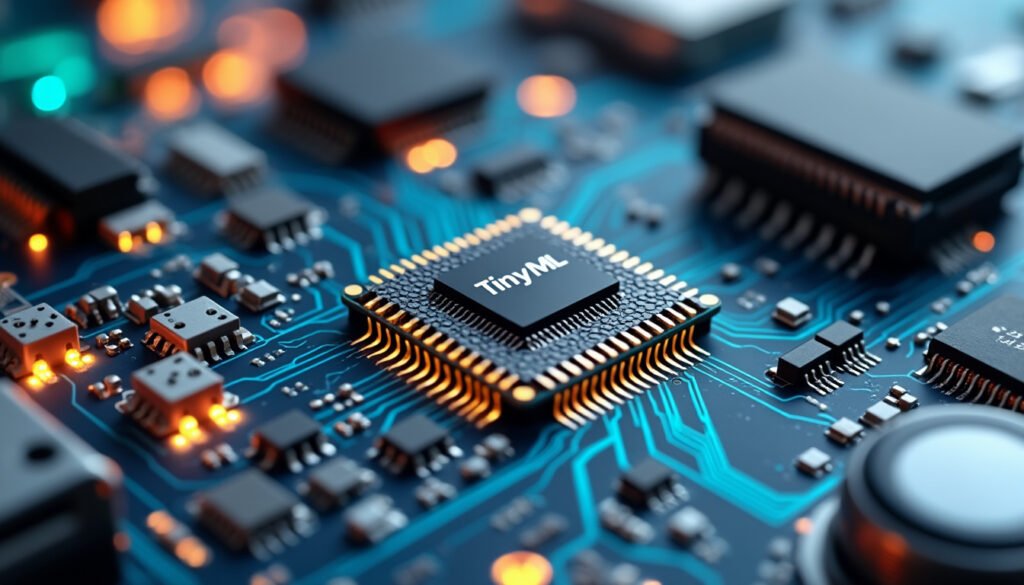
Tiny Machine Learning (TinyML) is the art and science of deploying highly optimized machine learning models onto resource-constrained, ultra-low-power hardware like microcontrollers. Think of it as giving a digital nervous system to everyday objects. These models are designed to run on mere milliwatts of power, enabling devices to analyze sensor data, recognize patterns, and make decisions without ever needing to connect to a server.
Working in tandem is Edge AI, a broader concept where AI models run locally on an edge device, which could be anything from a security camera to an industrial gateway. TinyML is a specialized subset of this, focusing on the smallest of devices. Together, they shift intelligence away from the centralized cloud and distribute it across the network, creating a faster, more resilient, and more private technological ecosystem.
Why Lightweight AI is Reshaping the IoT Landscape
The strategic shift to on-device processing isn’t just an incremental improvement; it fundamentally changes what IoT devices can achieve. By bringing intelligence to the source of data, TinyML provides a competitive advantage built on speed, efficiency, and autonomy. The benefits ripple through every aspect of a device’s lifecycle and performance.
The core advantages reshaping the industry include:
- Real-Time Responsiveness: With inference happening locally, the delays associated with cloud communication vanish. A smart camera can detect an intruder instantly, and a medical wearable can alert a user to a heart anomaly on the spot, where milliseconds can be critical.
- Drastic Energy Efficiency: Many IoT devices rely on batteries for years at a time. TinyML is engineered for ultra-low power consumption, making long-term, off-grid deployments not just possible, but practical.
- Enhanced Privacy and Security: By processing sensitive information like audio, video, or biometric data directly on the device, TinyML minimizes data transmission. This “privacy-by-design” approach is crucial for building user trust and complying with regulations.
- Scalability and Lower Costs: As billions of devices come online, the cost of cloud infrastructure and bandwidth to process all their data would be astronomical. Edge intelligence filters the noise, sending only relevant insights to the cloud, dramatically reducing operational expenses at scale.
- Unwavering Reliability: In environments with spotty or nonexistent internet connectivity—like remote agriculture fields or industrial sites—devices powered by TinyML continue to operate intelligently, ensuring consistent and dependable performance.
TinyML in Action: From Smart Homes to Smart Farms
The theoretical benefits of TinyML are already manifesting in practical, world-changing applications across numerous sectors. As of 2026, the demand for engineers specializing in AI optimization for microcontrollers has surged, reflecting a clear industry trend toward embedding intelligence everywhere.
In healthcare, smartwatches and fitness trackers have evolved from simple step counters into sophisticated health monitors. Powered by TinyML, they now analyze heart rate variability, sleep patterns, and even detect signs of atrial fibrillation locally, offering personalized health insights without constantly uploading private data.
Agriculture is also undergoing a transformation. IoT sensors embedded in soil can now do more than just report moisture levels. They analyze nutrient composition, detect early signs of crop disease, and identify pests in real time. This allows farmers to apply resources with surgical precision, boosting yields while minimizing environmental impact. Explore some of the groundbreaking TinyML applications to see how this technology is being deployed today.
Pioneering Predictive Maintenance and Autonomous Systems
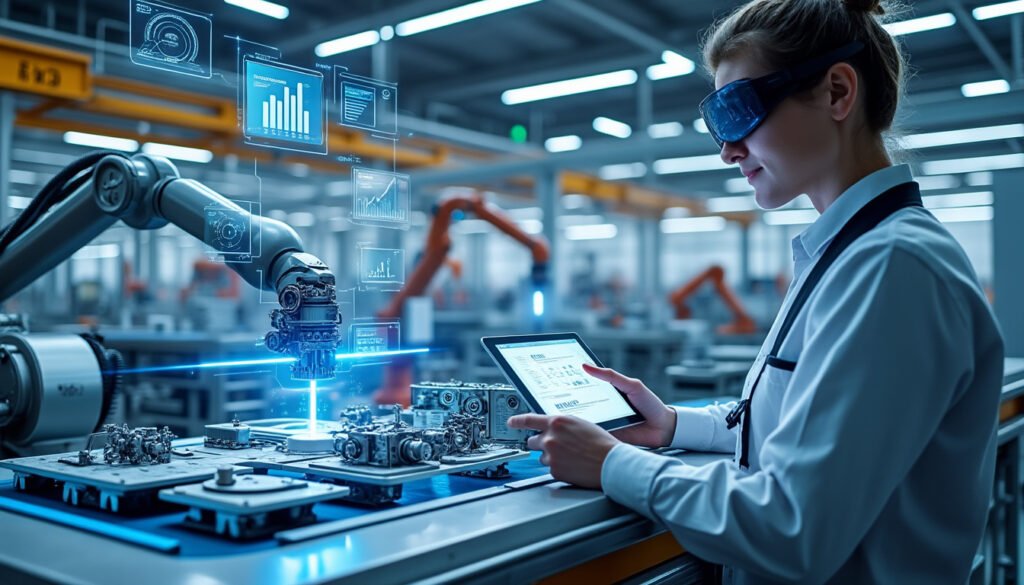
Within industrial settings, TinyML is the engine behind predictive maintenance. Vibration sensors attached to factory machinery can analyze operational patterns and predict mechanical failures before they happen. This shift from reactive repair to proactive maintenance saves companies millions in potential downtime and equipment costs.
Furthermore, the world of autonomous vehicles and drones relies heavily on on-device processing. TinyML enables a drone to recognize and avoid an obstacle mid-flight without waiting for instructions from a ground station. In autonomous cars, it powers the immediate processing of visual data from sensors, a critical function for ensuring passenger safety where every fraction of a second matters.
Overcoming the Hurdles in Micro-Scale Machine Learning
Deploying powerful AI on tiny, low-cost hardware is not without its challenges. The primary hurdle lies in the immense optimization required. Models must be compressed and quantized to fit within kilobytes of memory and execute efficiently with limited processing power. This often involves a delicate trade-off between model accuracy and its resource footprint.
Security is another paramount concern. While local processing enhances privacy, the devices themselves must be hardened against potential attacks. Fortunately, rapid advancements in hardware and software are addressing these issues head-on. Companies like Google, with its TensorFlow Lite for Microcontrollers framework, and Arm, with its power-efficient Cortex-M processors, are creating the tools and platforms that simplify and secure TinyML development.
Ultimately, the success of any TinyML model, no matter how optimized, hinges on one critical element: high-quality training data. For an AI model to perform reliably on a resource-constrained device, it must be trained on clean, precisely labeled datasets. This foundation of well-structured data ensures that the intelligence embedded at the edge is both accurate and effective, turning promising technology into real-world solutions that are truly smart.