
The term Industry 4.0 has permeated boardrooms and factory floors, conjuring visions of advanced robotics and automated assembly lines. Yet, at its core, driving this profound transformation is a far more pervasive, often understated force: the Internet of Things, or IoT. Many perceive Industry 4.0 as a futuristic ideal, a collection of buzzwords lacking tangible presence, while industries secretly grapple with hidden inefficiencies and fragmented communication. Without a clear understanding of its primary engine, businesses risk lagging, enduring production losses, declining quality, and a degraded customer experience. Meanwhile, competitors silently flourish through relentless optimization. This article aims to demystify IoT, revealing its role as the true architect of this industrial evolution, a discreet yet omnipresent presence that is the undeniable key to the efficiency, responsiveness, and innovation defining the present and shaping the future of manufacturing.
The Silent Architect of Digital Transformation
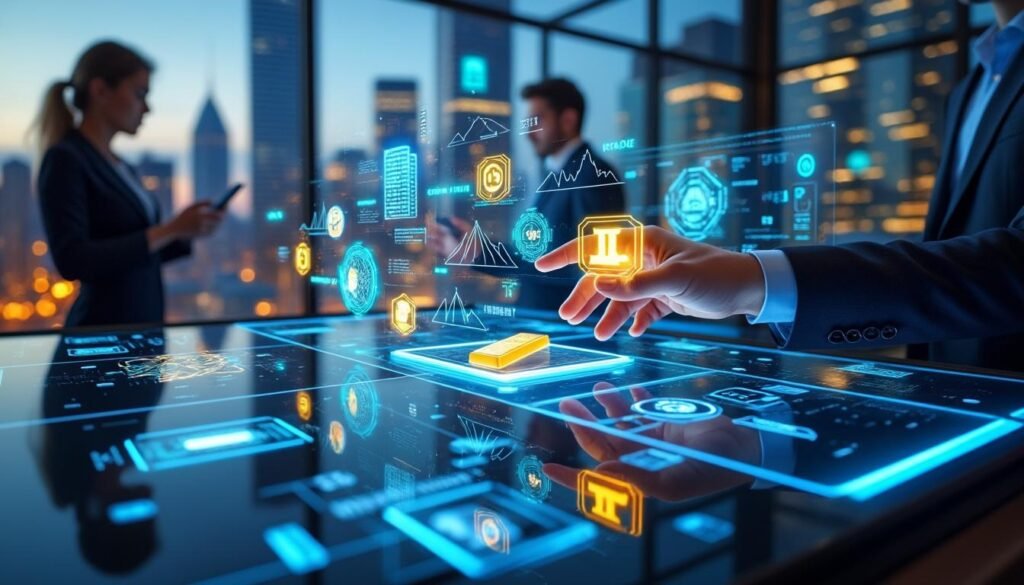
Industry 4.0 is not merely an upgrade; it is the fourth industrial revolution, a paradigm shift where digital technologies merge with physical production. While artificial intelligence, big data, and advanced robotics often capture the spotlight, it is the Internet of Things that acts as its silent architect, providing the foundational layer of connectivity and data collection that makes everything else possible. IoT devices, embedded within machinery and infrastructure, are the senses of the modern factory, gathering raw intelligence at every point of operation. This constant stream of real-time information transforms traditional, linear value chains into dynamic, integrated networks, fostering unprecedented levels of visibility and control.
IoT at the Core of Cyber-Physical Systems
The essence of Industry 4.0 lies in cyber-physical systems (CPS), where physical processes are monitored and controlled by computer-based algorithms. IoT sensors are the vanguard of this integration, transforming inert machines into active, data-generating entities. These sensors measure everything from temperature and pressure to vibration and output, feeding this invaluable data into a broader network. Actuators and programmable logic controllers (PLCs) then respond to these data streams, executing commands that adjust parameters or trigger actions, effectively closing the loop between the digital and physical realms.
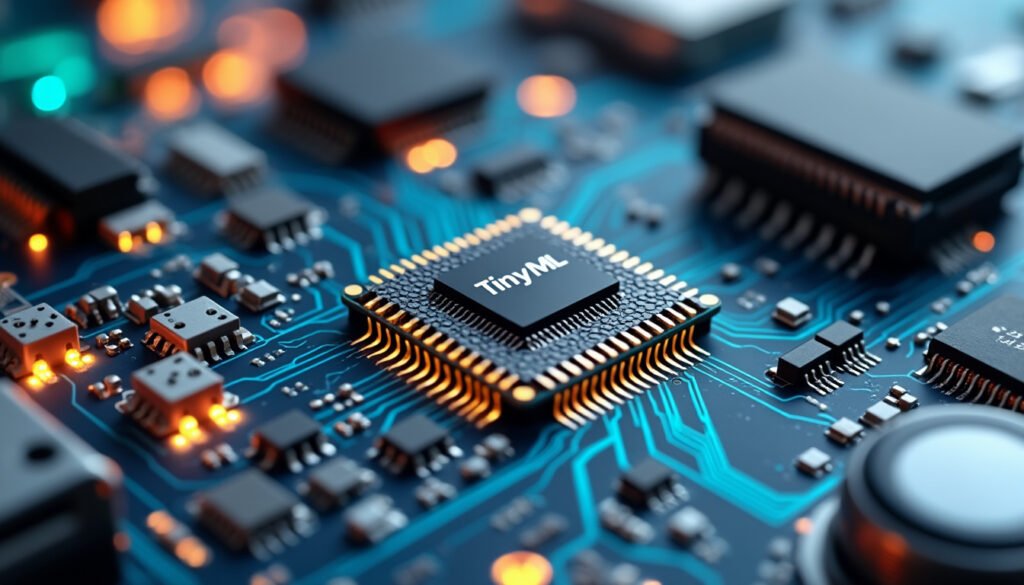
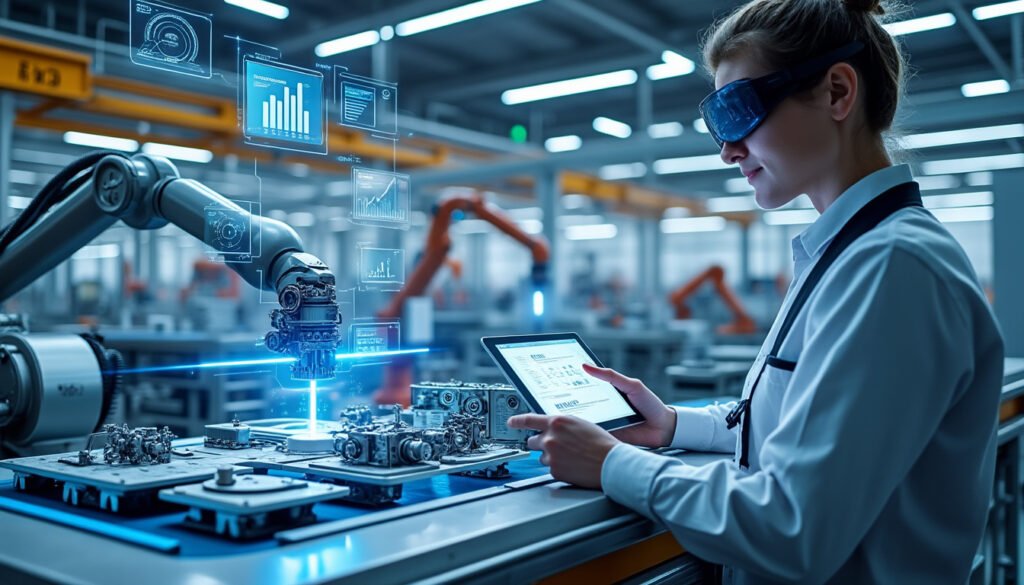
Crucially, the rise of Edge AI and TinyML has revolutionized this interaction. Instead of sending all raw data to the cloud for processing, these compact, powerful AI models operate directly on the IoT devices themselves. This localized intelligence enables real-time decision-making, drastically reducing latency and bandwidth requirements. Imagine a smart camera on an assembly line that can identify a defective product in milliseconds, instructing a robotic arm to remove it before the information even leaves the factory floor. This blend of ubiquitous sensing and on-device intelligence marks a significant leap in operational responsiveness and autonomy.
From Data Streams to Smart Operations: How IoT Powers Industry 4.0
The data generated by IoT devices is not merely raw information; it is the lifeblood of the smart factory. Through advanced analytics and machine learning, this deluge of Big Data is transformed into actionable insights that drive continuous improvement. Companies can now stream data in real-time, gleaning intelligence that allows for instantaneous adjustments in material sourcing, machine functionality, and even customer service. This capability underpins the modern vision of manufacturing, fostering environments that are both highly efficient and remarkably adaptive.
Predictive Maintenance: Anticipating Rather Than Reacting
One of the most transformative applications of IoT in industry is predictive maintenance. Traditional maintenance schedules often involve reacting to breakdowns, leading to costly downtime and lost productivity. With IoT, this paradigm shifts entirely. Smart sensors continuously monitor the operational health of machinery, tracking wear and tear in real time. Machine learning algorithms analyze these data patterns, creating precise models unique to each process. For example, in a paper factory, sensors monitoring the cutting blades can detect subtle dulling long before it produces ragged edges that would displease consumers. This allows maintenance to be scheduled proactively, often during offline hours, eliminating unscheduled stoppages and preserving valuable production time. The result is a significant reduction in major losses and a substantial boost in overall agility, a cornerstone of digital transformation.
Real-Time Process Optimization
Beyond maintenance, IoT enables an unprecedented level of real-time process optimization. By connecting machines, systems, and people through intelligent data exchange, IoT transforms factories into dynamic, responsive environments. Data flowing from hundreds, even thousands, of sensors allows production parameters—such as the quality of raw materials or the speed of an assembly line—to be adjusted dynamically. This constant feedback loop ensures consistent product quality and maximizes operational efficiency. For instance, if a specific batch of raw material is slightly denser than usual, IoT-enabled systems can automatically adjust machine settings to maintain the desired output specification, preventing errors before they occur and ensuring every item meets rigorous quality standards.
Real-World Impact: Enhancing Products, Processes, and Customer Satisfaction
The quiet revolution of IoT extends far beyond the factory gates, fundamentally reshaping product quality, operational processes, and the very nature of customer engagement. The integration of IoT in manufacturing helps ensure that products leaving the line are of the highest possible standard, consistently. Once a defect is identified, the smart machine can be taught to self-correct, preventing additional errors. This yields better products and significantly fewer losses, saving millions in potential recalls and brand damage.
From Assembly Line to User Experience
The journey of a product doesn’t end when it leaves the factory; in the age of IoT, it continues to provide valuable insights. By analyzing the immense data captured by smart sensors once products are in use, manufacturers gain a deeper understanding of real-world performance. They can discern when products might fail, how they are being utilized, and precisely how to refine the production process accordingly. This direct feedback loop from the customer’s environment back to the design and manufacturing stages allows for continuous improvement and the development of truly user-centric solutions. Moreover, leveraging advanced analytics like text mining and machine learning, companies can rapidly process public feedback on social media, addressing customer complaints in near real-time and fostering unparalleled customer satisfaction.
Navigating the Future: Challenges and Opportunities in an IoT-Driven Industrial Landscape
As 2026 unfolds, the proliferation of IoT in industry presents both formidable challenges and boundless opportunities. The sheer volume of data generated demands sophisticated management and analysis capabilities, while the heightened interconnectedness raises critical cybersecurity concerns. Interoperability between diverse systems and the significant upfront costs of implementation remain key hurdles. Furthermore, the rapid evolution of these technologies necessitates a continuous reskilling of the workforce to bridge emerging skill gaps, a task governments globally are addressing with varying degrees of success.
Cyber Defense and Resilience in the Industrial IoT Era
The increased reliance on interconnected systems makes industrial operations more vulnerable to cyber threats. A single breach in an IoT network could have cascading effects, impacting production, safety, and intellectual property. Consequently, robust cybersecurity strategies must be integrated “by design” into every IoT solution, not as an afterthought. Continuous monitoring, threat detection, and rapid incident response mechanisms are paramount. Legislative frameworks, such as the EU Cyber Resilience Act, are already reshaping how IoT hardware is developed, mandating security requirements from the outset and setting a global precedent for enhancing digital resilience across industrial ecosystems.
Despite these challenges, the opportunities are immense. IoT is fostering new business models, transforming product sales into “product-as-a-service” offerings, enabling greater sustainability through optimized energy consumption and resource management, and accelerating innovation at an unprecedented pace. For companies embarking on this journey, a structured approach is vital. Consider the following conceptual checklist for successful IoT implementation:
- Define Clear Objectives: What specific problems will IoT solve, or what new value will it create?
- Assess Infrastructure Readiness: Evaluate existing networks, computing capabilities (edge vs. cloud), and data storage.
- Prioritize Cybersecurity: Implement robust security protocols from the design phase, focusing on data encryption, access control, and anomaly detection.
- Ensure Interoperability: Select open standards and platforms that facilitate seamless communication between diverse devices and systems.
- Invest in Data Analytics Capabilities: Develop internal expertise or partner with specialists to transform raw data into actionable insights.
- Address Skill Gaps: Plan for workforce training and reskilling to manage and leverage new IoT technologies.
- Start Small, Scale Smart: Begin with pilot projects to prove concepts and demonstrate ROI before widespread deployment.
- Foster a Culture of Innovation: Encourage experimentation and adaptation to continuously derive value from IoT investments.