

The creative landscape is undergoing a transformation, often subtle yet profound, as generative AI seamlessly integrates into artistic workflows. This isn’t merely about new tools for designers or faster content generation for marketers; it’s a re-evaluation of creativity itself. From the brushstroke of a digital painting to the composition of a musical score, AI is not just assisting; it is quietly rewriting the fundamental rules, challenging perceptions of authorship, authenticity, and the very essence of human artistic expression. The distinction between human ingenuity and machine-generated art is becoming increasingly blurred, prompting a deeper look into this evolving symbiotic relationship and its implications for the future of creative industries.
The silent revolution: Redefining creativity with generative AI
Generative AI (GenAI) has emerged as a disruptive force, pushing the boundaries of what was once considered exclusively human creative territory. Unlike traditional predictive AI, which analyzes data to forecast outcomes, GenAI actively produces new content—whether it’s music, fine arts, literature, or design. This capability ushers in an era where AI systems collaborate with human artists to yield innovative results.
A notable milestone indicating this shift was the Museum of Modern Art’s (MoMA) acquisition of Refik Anadol’s “Unsupervised” series, marking the first time a major institution integrated an AI-generated artwork into its permanent collection. Such initiatives underscore the growing acceptance and importance of GenAI in the art world. By 2026, the technology has advanced to a point where AI-generated works, particularly from systems like DALL-E and Midjourney, can capture intricate details and nuances, making them indistinguishable from human-made creations, even to the discerning eye of professionals.
Beyond tools: How AI becomes a co-creator in the triple-loop workflow
The integration of GenAI into creative processes signifies more than just adopting a new instrument; it heralds a shift toward a collaborative paradigm. This new dynamic is often described as a “triple-loop approach” where human and autonomous computational tools engage in an active dialogue that shapes both the final design and the creative journey itself. This differs from traditional design aids, as GenAI assumes a more independent role, directly influencing the creative direction.
In this workflow, the AI first generates a range of alternatives based on input parameters. Artists then evaluate these options, providing feedback that allows them to modify the AI’s settings or prompts, refining the output. This feedback loop is crucial, though it can sometimes lead to excessive refinement if not managed with deliberate time constraints, potentially hindering truly unconventional ideas. The third loop involves mutual learning: artists gain insights into the AI’s underlying models, while the AI learns about the artist’s thought processes, fostering deeper alignment.
For example, a boutique animation studio, “AristoLabs,” found GenAI indispensable for rapid concept iteration. Their animators would input preliminary character designs or scene descriptions into an AI system, which would instantly generate dozens of variations. This accelerated the ideation phase, allowing the human creatives to explore unexpected directions. While the AI provided the initial spark, the artists were essential in guiding the outputs, imbuing them with the subtle emotional depth and unique narrative elements that resonated with their brand’s storytelling.
This evolving dynamic illustrates how AI transforms from a mere assistant into a genuine co-creator. However, despite its capacity for enhancing originality, GenAI often struggles to imbue designs with the sociocultural depth and individuality that define human artistry, emphasizing the continued necessity of human input.
| Creative Workflow Stage | Traditional Approach | GenAI-Assisted Approach |
|---|---|---|
| Idea Generation | Brainstorming, sketching, mood boards | AI generates variations from prompts, expands concepts |
| Prototyping/Drafting | Manual rendering, initial drafts | AI rapidly creates multiple drafts, visual mock-ups |
| Refinement & Iteration | Artist manually revises work | Artist provides feedback, AI refines outputs iteratively |
| Learning & Development | Experience, traditional education | Mutual learning between human and AI; AI literacy for artists |
The art of deception: When AI-generated works mimic human ingenuity
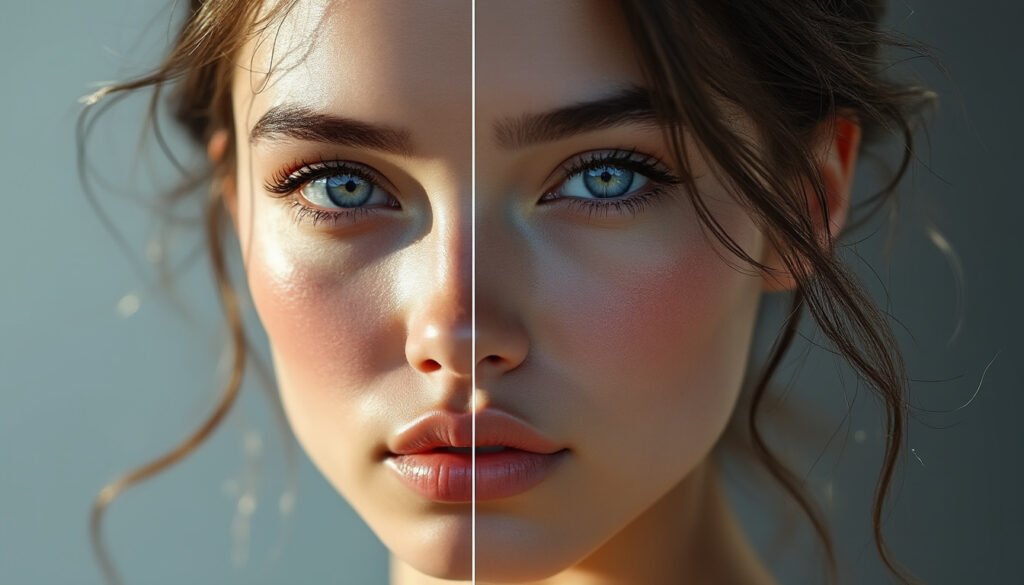
One of the most captivating, and at times unsettling, aspects of generative AI is its capacity to produce art so convincing that it defies human detection. The modern “Turing Test” for creativity, adapted from Alan Turing’s original concept, challenges whether individuals can reliably distinguish between human-made and AI-generated music, poetry, or visual art. Studies have consistently yielded mixed results, demonstrating that our ability to identify the true origin of a creative piece is far from perfect.
Consider the field of poetry. Researchers have found that while people might distinguish randomly selected poems from AI-generated ones when human-curated, this ability significantly diminishes when a large language model (LLM) curates the selection. This suggests that the way content is presented or even filtered can heavily influence perception. Similarly, in visual arts, the type of artwork plays a role; people sometimes show a bias, associating abstract art with machines and representational art with human creators, though this cognitive heuristic is evolving as AI advances.
The collective evidence points to an increasing convergence between human and AI creative outputs. By 2026, it is not uncommon for experts in various creative fields to struggle with differentiating the source of an artwork. This challenges our traditional understanding of art, raising profound questions about what constitutes authenticity and where value truly resides in a world where machines can replicate, and even innovate upon, human creative styles.
Navigating the new canvas: Perceptions and biases in the age of AI art
The journey of GenAI art from creation to reception is heavily influenced by how it is labeled and perceived. Research indicates a prevalent “human favoritism” bias, where art explicitly labeled as human-made often receives higher ratings for creativity, depth, and aesthetic appeal compared to identical pieces attributed to AI. This bias is particularly strong among individuals who view creativity as an exclusively human trait.
However, the context in which AI-generated content is presented can significantly alter these perceptions. For instance, when art is viewed through a commercial lens—such as in advertising posters—the negative bias against AI involvement tends to diminish. In these scenarios, the perceived commercial intent can override algorithm aversion. Furthermore, disclosing the level of human involvement in a co-created piece can mitigate some negative perceptions, as it highlights the blend of human agency and technological assistance, making the artwork feel more authentic and the creative process less disassociated from human effort. This nuanced understanding is crucial for creatives navigating this new landscape.
Individual differences also play a role. Some studies suggest gender-based variations in trust towards AI-generated content, and existing beliefs about AI’s limitations can strongly shape an individual’s evaluation of AI art. Interestingly, competence in using GenAI tools does not necessarily correlate with more positive attitudes towards AI-generated art. This suggests that familiarity with the technology doesn’t automatically translate into acceptance within artistic contexts, underscoring the deep-seated psychological and philosophical dimensions at play.
Shaping the future: Ethical imperatives and the evolving creative professional
As generative AI continues its rapid advancement, the creative industry must confront a series of complex ethical challenges. Questions of authorship and copyright are paramount; who owns the rights to content generated by an AI, particularly when it’s trained on vast datasets of human-created works? There’s also the concern of potential misuse for misinformation, where realistic AI-generated media could blur the lines between fact and fiction, as explored in discussions around AI-powered phishing and the broader ethics of AI agents.
A critical issue is the perpetuation of biases and stereotypes embedded in GenAI outputs, stemming from historical biases present in their training data. Addressing this requires a multifaceted approach: promoting diversity in AI development teams, educating developers and users on bias detection, and implementing advanced debiasing techniques. Human agency remains indispensable in actively shaping AI-generated content through precise prompts and maintaining editorial control to prevent unintended biases.
The impact on the job market is another vital consideration. While fears of widespread job displacement persist, the reality in 2026 points more towards role redefinition. Traditional creative roles are transforming into hybrid positions that demand a blend of artistic expertise and GenAI literacy. Professionals might shift from being sole creators to curators, directors, or prompt engineers, guiding AI systems to realize their creative visions. This evolution highlights the importance of adaptability and continuous learning for creatives to thrive in this new landscape.
Cultivating “AI-tistry”: Skills for the next generation of creators
The quiet revolution of generative AI calls for a new kind of creative professional—one who possesses not only traditional artistic skill but also robust “GenAI literacy.” This new literacy extends beyond merely operating AI tools; it encompasses an understanding of their underlying mechanisms, their limitations, and crucially, the art of crafting effective prompts. Prompt engineering is becoming an essential skill, allowing artists to translate their nuanced creative intent into language AI can understand and execute.
The role of the artist is evolving from primary creator to a director or curator of AI-generated outcomes. For instance, an architect might use GenAI to explore countless design iterations for a building, but it is their human expertise that guides the AI, evaluates the outputs, and ensures the final design aligns with human needs, cultural context, and aesthetic principles. This hybrid approach blends deep learning’s speed and versatility with the irreplaceable elements of human intuition, emotional intelligence, and critical judgment.
Furthermore, GenAI is proving to be a powerful learning tool, particularly for emerging artists and novices. It offers unprecedented opportunities to explore creative possibilities, experiment with styles, and rapidly iterate on ideas, thereby accelerating artistic development. The evolving ecosystem of AI tools and resources will continue to support creativity across various domains, empowering individuals to express themselves in novel ways. The next generation of creators will be those who master the delicate balance of blending traditional artistry with the sophisticated capabilities of AI, ensuring that human creativity remains at the heart of innovation.