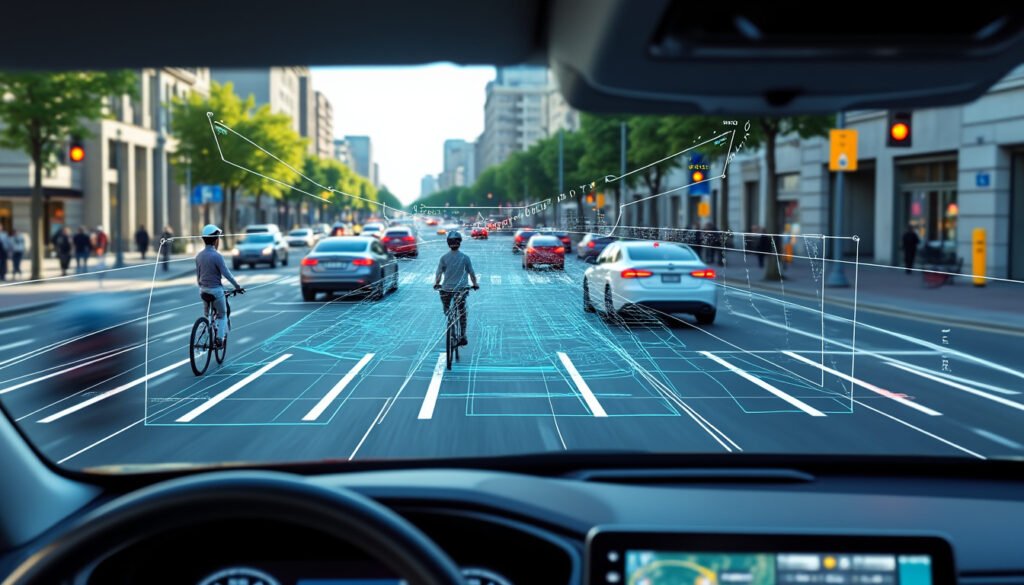


For years, the fields of computer vision and natural language processing existed in separate silos. Artificial intelligence could either interpret images or understand text, but the seamless integration of both, a cornerstone of human cognition, remained a formidable challenge. This division created a significant bottleneck, limiting AI’s ability to perform tasks that required a holistic understanding of visual and textual information, leaving early applications like basic image captioning feeling incomplete and lacking true context.
The arrival of Vision-Language Models (VLMs) has fundamentally altered this landscape. These sophisticated AI systems are designed to jointly interpret, process, and generate information from both images and text. By bridging the gap between sight and language, VLMs have unlocked capabilities previously confined to science fiction, permanently changing the trajectory of computer vision and AI development.
The Evolution from Simple Captioning to Multimodal Understanding
The journey to modern VLMs began with image captioning systems. In the early 2010s, these methods combined handcrafted visual features with rule-based text templates to generate simple descriptions. While functional, they were rigid and lacked the flexibility to capture nuance. The rise of deep learning marked a significant step forward, with models in 2015 combining Convolutional Neural Networks (CNNs) for image encoding and Recurrent Neural Networks (RNNs) for caption generation.
By 2018, more powerful transformer networks replaced RNNs, but the applications remained largely task-specific. A true paradigm shift occurred in 2021 with OpenAI’s release of CLIP (Contrastive Language–Image Pretraining). Rather than focusing on a single task, CLIP was a general-purpose foundation model trained on 400 million image-text pairs. This created a powerful and versatile base that paved the way for the complex vision–language models we see today.
Inside Modern VLM Architectures
Contemporary VLMs, whether proprietary systems like GPT-4V and Google’s Gemini or open-source alternatives, are typically built by merging powerful, pre-trained components. The general design involves a vision encoder to process images, a large language model (LLM) to handle text, and a specialized module to connect them. This modular approach allows developers to leverage the strengths of existing state-of-the-art models.
Models like LLaVA (Large Language and Vision Assistant) exemplify this strategy. LLaVA combines a pre-trained CLIP vision encoder with an off-the-shelf LLM called Vicuna. A simple projection layer acts as a bridge, converting image features into “image tokens” that the LLM can process alongside standard text tokens. The entire system is then fine-tuned through a process known as instruction tuning to align the visual and linguistic components, enabling it to follow complex multimodal instructions.
Advancing Integration with Flamingo and Qwen2-VL
More elaborate designs push the boundaries of integration even further. DeepMind’s Flamingo, for instance, supports multiple images and even video by using a sophisticated Perceiver-Resampler module. This component converts variable-length visual inputs into a fixed number of tokens. Flamingo also injects visual information directly into the intermediate layers of its LLM using gated cross-attention blocks, creating a more entangled and deeply integrated system.
Released in 2024, Alibaba’s Qwen2-VL introduced another set of innovations. It supports arbitrary image resolutions, avoiding the need to reshape inputs to a fixed size. Its most significant contribution is Multimodal Rotary Positional Encoding (M-RoPE), which preserves the spatial layout of images and the temporal continuity of video. This allows the model to understand not just what is in an image, but where it is, enabling advanced capabilities like visual grounding—the ability to reason about and reference specific objects within a scene.
| Model | Key Innovation | Vision Encoder | LLM Backbone | Integration Method |
|---|---|---|---|---|
| LLaVA 1.0 | Simple, effective open-source design | CLIP ViT-L/14 | Vicuna | Linear Projection Layer |
| Flamingo | Multi-image and video support | ResNet-based NFNet-F6 | Chinchilla | Gated Cross-Attention Blocks |
| Qwen2-VL | Dynamic resolution and spatial awareness | DFN Vision Transformer | Qwen2 | Multimodal Rotary Positional Encoding (M-RoPE) |
How VLMs Are Redefining Real-World AI Applications
The impact of this technological leap is already evident in widely used commercial applications. Systems like OpenAI’s GPT-4V, Anthropic’s Claude 3 Opus, and Microsoft’s Copilot with Vision have integrated these capabilities, allowing users to upload images and diagrams and discuss them conversationally. This shift moves AI interaction from purely text-based prompts to a richer, more intuitive multimodal dialogue.
These models excel at tasks that were previously impossible for AI. For instance, a user can provide an image of the inside of their refrigerator and ask for a recipe using only the ingredients shown. Similarly, a developer can upload a screenshot of a web page and ask the VLM to generate the corresponding HTML code. The possibilities extend into specialized fields, including medical image analysis, autonomous navigation, and robotic instruction. You can learn more about their capabilities from various open-source and open-science initiatives.
Enabling Sophisticated Visual Reasoning and Grounding
Beyond simple identification, modern VLMs can perform complex visual reasoning. This includes Visual Question Answering (VQA), where the model answers detailed questions about an image’s content, relationships between objects, and inferred context. For example, instead of just identifying “a cat and a dog,” a VLM can answer, “Why does the cat on the left appear cautious of the approaching dog?”
The visual grounding capability enabled by architectures like Qwen2-VL is particularly transformative. By preserving spatial information, these models can respond to prompts that reference specific parts of an image, such as “Describe the pattern on the vase in the top-right corner” or “Generate a caption for the person standing in the background.” This level of detailed comprehension is critical for applications in robotics, accessibility tools, and interactive content creation.
What is a Vision-Language Model (VLM)?
A Vision-Language Model, or VLM, is a type of artificial intelligence that can process and understand information from both images and text simultaneously. It extends the capabilities of Large Language Models (LLMs) by allowing them to ‘see’ and reason about visual data in conjunction with language.
How are VLMs different from traditional computer vision models?
Traditional computer vision models are typically specialized for specific tasks like object detection or image classification. VLMs are far more general-purpose. They leverage their understanding of language to perform a wide range of tasks based on textual instructions, such as answering complex questions about an image, describing scenes in detail, or following commands that involve visual elements.
What are some key open-source VLMs available to researchers?
The research community has released several powerful open-source VLMs, offering alternatives to proprietary models. Some of the most notable examples include LLaVA, InstructBLIP, MiniGPT-4, and the OpenFlamingo framework, which enable experimentation and academic study in the field.
What is ‘visual grounding’ in the context of VLMs?
Visual grounding is the ability of a VLM to connect specific words or phrases in a text to their corresponding regions or objects in an image. For instance, if you ask it to ‘highlight the red car,’ a model with grounding capabilities can identify and locate that specific object. This is essential for detailed interaction and robotics.