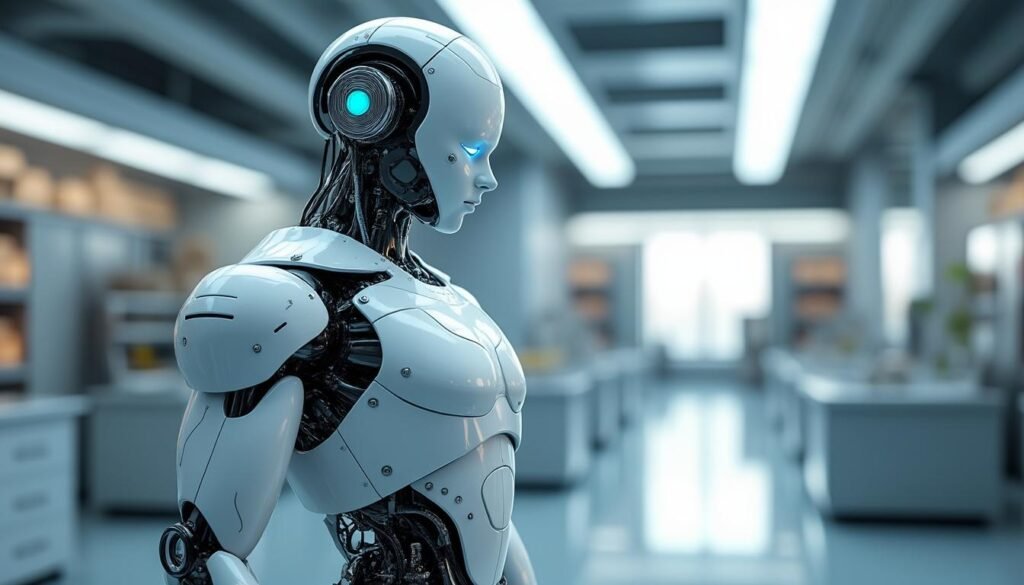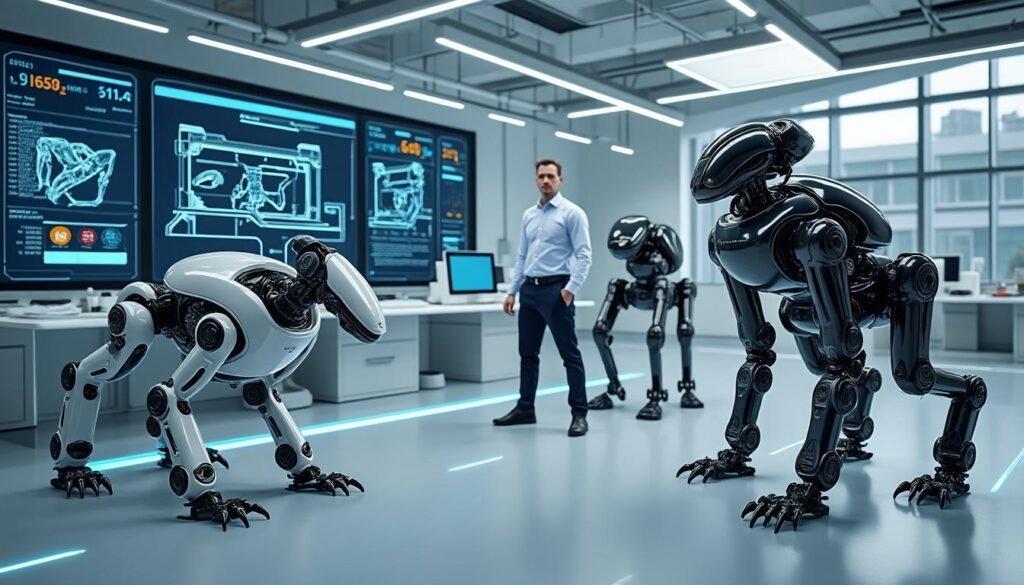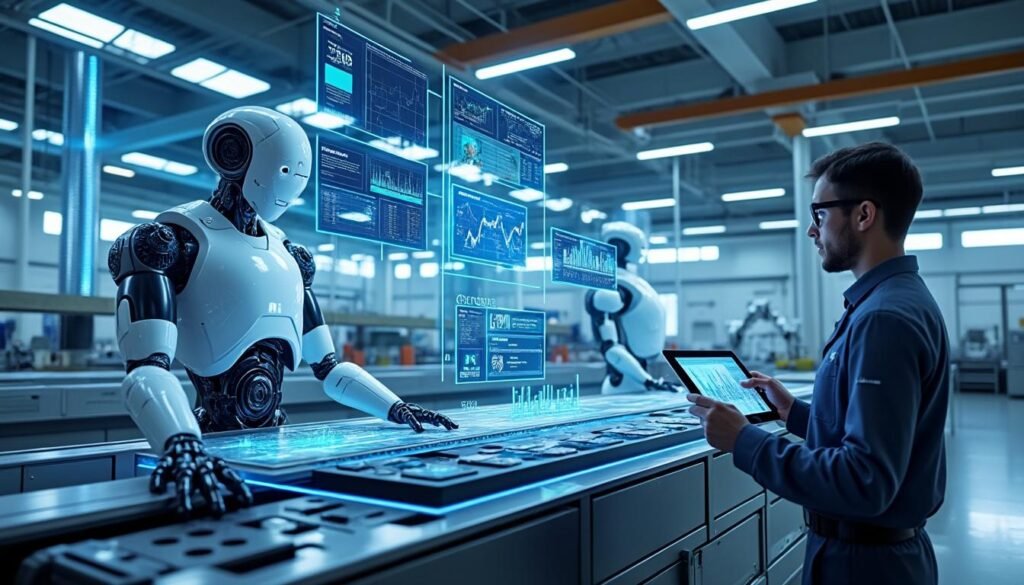


In early 2026, a quiet transformation began to unfold across the world’s logistics centers and factory floors. This shift arrived not with the fanfare of a keynote speech or a viral video of a backflipping machine, but with the subtle, steady integration of a new kind of worker. Humanoid robots, long the subject of science fiction and carefully staged demonstrations, are now performing tasks once deemed too complex, too variable, and too distinctly human for automation.
What makes this moment pivotal is not a single technological breakthrough, but the convergence of multiple streams of innovation and economic necessity. Companies are no longer treating these machines as research projects; they are deploying them as operational assets. This transition from spectacle to infrastructure signals the true dawn of the humanoid robotics era.
From Advanced Prototypes to a Productive Workforce
For years, the promise of humanoid robots was hampered by a gap between capability and reliability. A machine that could perform a task once in a lab was a world away from one that could do it thousands of times a day on a chaotic factory floor. The industrial world rewards predictability, not novelty. The turning point arrived with the deep integration of large-scale AI models into robotic control systems, a key battleground in the ongoing AI race.
This leap forward allowed for a crucial change in philosophy. Instead of being meticulously programmed for a single, repetitive motion, these systems are now trained to interpret goals and adapt their actions. This generalization dramatically lowers the engineering overhead for deployment. Paired with significant advances in hardware—more efficient actuators, sharper sensors, and longer-lasting batteries—these robots can now operate with greater precision for extended shifts with less maintenance.
A New Breed of Worker on the Modern Assembly Line
Step inside a modern logistics hub, and you’ll witness an environment of constant, orchestrated motion. While traditional automation like conveyor belts and fixed robotic arms excel at high-volume, repetitive tasks, they falter when faced with variability. Humanoid robots, however, are built for just such environments. They navigate complex layouts, identify objects in cluttered spaces, and pivot between tasks with an agility that mirrors human flexibility.
A single unit might spend its morning picking diverse items from shelves, its afternoon loading pallets, and its evening assisting with inventory scans. This versatility is what truly sets them apart from their automated predecessors. Workers in these facilities report a gradual integration, where robots take on the most physically strenuous or monotonous jobs.
- Bin Picking: Identifying and retrieving specific items from mixed-item storage bins.
- Palletizing and Depalletizing: Stacking boxes onto pallets or unloading them for sorting.
- Machine Tending: Loading and unloading parts from CNC machines or other manufacturing equipment.
- Logistics Transport: Moving carts, totes, and materials across the factory floor.
- Quality Inspection: Using advanced vision systems to identify defects in finished products.
The Economic Equation of Humanoid Robot Deployment
Ultimately, any technology’s adoption hinges on a simple question: does it make financial sense? For humanoid robots, the answer is shifting decisively toward “yes.” While the initial investment remains substantial, a new economic calculus for manufacturers is emerging. Companies now evaluate the total cost of ownership, factoring in uptime, versatility, and the ability to operate around the clock without fatigue.
Widespread labor shortages in manufacturing and logistics, coupled with rising wages, have created a powerful incentive for scalable automation. A robot capable of performing multiple functions is a far more valuable asset than a specialized machine, as it can adapt to shifting production demands, which drastically shortens the return on investment. Furthermore, a powerful network effect is taking hold, where software updates derived from one facility’s experience can be deployed across an entire fleet, accelerating performance improvements globally.
Human and Machine Collaboration: Reshaping the Workforce
The arrival of humanoid robots on the factory floor inevitably sparks conversations about the future of human labor. Interviews with managers and floor workers reveal a mix of cautious optimism and underlying concern. Many appreciate the reduction in physically demanding jobs that often lead to injury and burnout. Yet, the long-term implications of increasingly capable automation remain uncertain.
Managers often stress that robots are meant to augment their human teams, addressing labor gaps rather than replacing existing staff. The current model is one of collaboration, where humans handle supervision, complex problem-solving, and coordination, while robots perform the heavy lifting. This hybrid approach is redefining the future of automation and creating new career paths. Roles like robotics technicians, fleet deployment managers, and human-robot interaction coordinators are emerging, requiring a blend of technical skill and operational expertise.
Beyond the Factory: The Next Frontiers for Humanoid Robotics
While manufacturing and logistics serve as the proving grounds, the implications of this technology extend much further. Industry analysts predict that as the technology matures and costs decline, humanoid robots will expand into more complex, human-centric settings. Fields like retail, healthcare, hospitality, and even construction are seen as the next frontiers.
The primary challenge in these public-facing environments is not just technical, but social. A robot in a hospital or retail store must interact with people in a way that feels natural, helpful, and trustworthy. This will require not just more advanced AI, but also sophisticated design focused on social cues and intuitive behavior. The trajectory, however, is clear: these machines are moving from controlled industrial spaces into the fabric of daily life.
Understanding the Long-Term Industrial Shift
What is happening today is not an overnight revolution but the beginning of a long and steady transition. Humanoid robots are not yet everywhere, nor are they a panacea for every industrial challenge. But they are no longer hypothetical. They are being tested, deployed, and refined in real-world conditions, creating a powerful feedback loop that will fuel the next wave of innovation.
History shows that such large-scale technological transitions unfold over decades. The current phase is about laying the foundation, building the infrastructure, and proving the economic models that will enable massive growth. The most profound changes are often the ones that happen quietly, hidden in plain sight. The real story of humanoid robotics is being written now, not in flashy headlines, but on the factory floors where efficiency is the only metric that matters.
What specific tasks are humanoid robots performing in factories in 2026?
In 2026, humanoid robots are primarily deployed for tasks that require mobility and manipulation in environments designed for humans. This includes bin picking, palletizing, machine tending (loading and unloading parts), and transporting materials across the factory floor. They are valued for their flexibility to switch between these tasks as needed.
Are humanoid robots replacing human workers?
The current trend is one of augmentation, not outright replacement. Robots are being deployed to fill labor shortages and to take over physically strenuous, repetitive, or dangerous tasks. This allows human workers to shift to higher-value roles involving supervision, quality control, maintenance, and complex problem-solving. However, the long-term impact on the labor market is still evolving.
How much does an industrial humanoid robot cost?
While prices are decreasing, the upfront cost of a humanoid robot in early 2026 remains significant, often ranging from $100,000 to $250,000 per unit, depending on capabilities and software. Many companies are also exploring Robotics-as-a-Service (RaaS) models, which involve leasing the robots for an hourly or monthly fee, lowering the barrier to entry.
What are the main challenges still facing humanoid robot deployment?
Key challenges include battery life and power efficiency for sustained, multi-shift operations. Ensuring robust reliability and minimizing downtime in demanding industrial environments is also critical. Finally, improving the robots’ ability to handle unexpected situations (exception handling) and interact safely and seamlessly with human coworkers remains an active area of development.