

The digital landscape of 2026 is defined by a chilling reality: the question is no longer whether an attack will happen, but how resilient a system will be when it does. This year has witnessed a dramatic escalation in the velocity and sophistication of cyber threats, pushing organizations to the brink. Record-breaking breaches, fueled by undetectable malware and hyper-realistic deepfakes, have reshaped the very definition of digital security.
Threat intelligence reports paint a stark picture of attackers moving with unprecedented speed. In some documented cases, malicious actors have penetrated networks and initiated lateral movement in under 30 seconds, a timeframe that renders traditional human-led response obsolete. This new era of cyber warfare is not just an evolution; it is a revolution, driven by the weaponization of artificial intelligence.
The new frontier: AI-powered cyber warfare
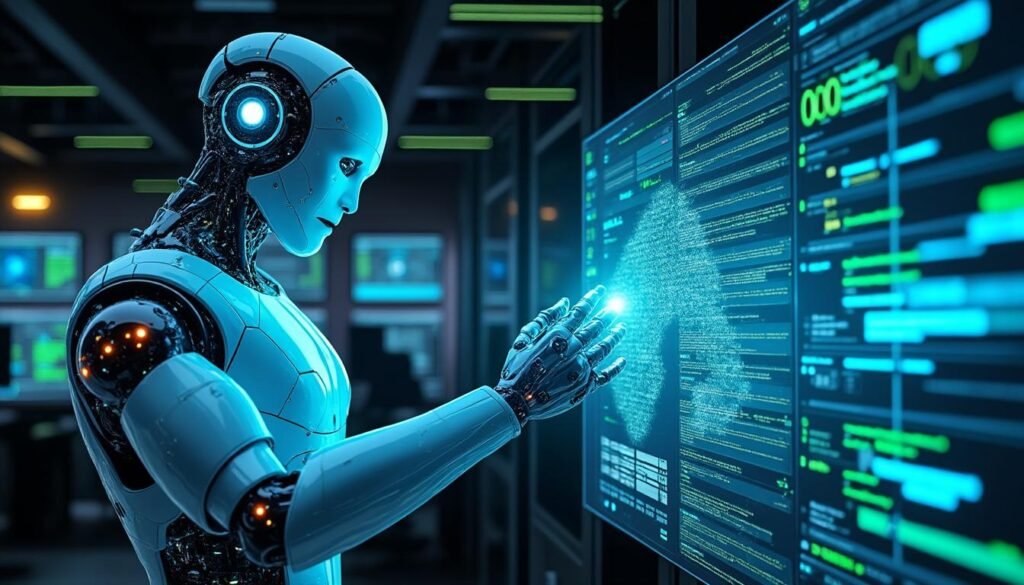
The most significant shift in the threat landscape this year is the widespread adoption of artificial intelligence by malicious actors. AI-driven cyberattacks are no longer theoretical; they are the year’s most potent and pervasive threats. These are not simple automated scripts but dynamic, learning systems designed to identify vulnerabilities, adapt to defenses, and execute complex intrusion campaigns with minimal human oversight.
These machine-led offensives are creating new classes of malware that can alter their own code to evade signature-based detection, making them virtually invisible to legacy security systems. Furthermore, AI is perfecting the art of social engineering through deepfake technologies that can convincingly mimic the voice and likeness of trusted individuals, leading to highly effective phishing and corporate espionage campaigns.
Anatomy of an automated breach
The speed of these attacks is what truly sets them apart. An AI agent can scan for vulnerabilities, craft a custom exploit, breach a perimeter, and escalate privileges in the time it takes for a human analyst to read an initial alert. This acceleration demands a fundamental rethinking of cybersecurity, moving from reactive defense to proactive, AI-powered threat hunting and autonomous response systems.
A chronicle of the year’s most devastating breaches
While AI grabs headlines, foundational security failures continue to provide fertile ground for attackers. The year has already been marked by several catastrophic breaches, each serving as a harsh reminder of the consequences of even minor oversights.
One of the most significant incidents involved a publicly exposed database containing 149 million records. Totaling nearly 100 GB of sensitive customer data, the breach was not the result of a sophisticated exploit. Instead, a simple cloud environment misconfiguration left the data completely open to the public internet, a stark illustration of how easily human error can lead to disaster. These kinds of major cybersecurity incidents underscore the critical need for continuous security posture management.
The cascading impact of supply chain attacks
Attackers are increasingly targeting the weakest link in the digital supply chain. By compromising a single, less-secure software vendor or service provider, they gain a foothold into the networks of dozens, or even hundreds, of larger, more secure organizations. These incidents have far-reaching consequences, eroding trust and causing widespread disruption across entire industries.
The most commonly targeted assets in these breaches include:
- Personally Identifiable Information (PII) for identity theft and fraud.
- Financial records and payment card information.
- Corporate intellectual property and trade secrets.
- Credentials for accessing further systems and escalating privileges.
Responding to the crisis: Global shifts in cybersecurity strategy
The relentless wave of attacks is forcing a strategic evolution across the global cybersecurity community. The old model of building a strong perimeter is obsolete. The new paradigm is one of assumed breach, built on the principles of Zero Trust architecture. This approach trusts no user or device by default, requiring strict verification for every single access request, regardless of its origin.
Collaboration has also become a critical pillar of modern defense. Governments and private sector organizations are forming new alliances to share threat intelligence in real-time. Recognizing that many cyber threats to watch are global in nature, this cooperative spirit is essential for mounting a coordinated defense against well-funded and highly organized threat actors.
The rise of cyber resilience
Ultimately, the focus is shifting from prevention alone to overall cyber resilience—the ability to withstand an attack and recover quickly. This involves not only robust technical defenses but also comprehensive employee training, well-rehearsed incident response plans, and business continuity strategies that ensure operations can continue even in the face of a significant breach. The organizations that thrive will be those that can adapt, respond, and endure when the inevitable attack occurs.
What makes 2026’s cyber threats different from previous years?
The key differentiators are the speed and sophistication driven by AI. Attackers are using machine learning to automate breaches, create evasive malware, and launch hyper-realistic deepfake phishing campaigns, shrinking the time from intrusion to impact from days to mere seconds.
How is artificial intelligence changing both cyberattacks and cyber defense?
On the attack side, AI enables faster, more adaptive, and harder-to-detect threats. On the defense side, AI is crucial for analyzing massive datasets to predict threats, hunt for anomalies in real-time, and orchestrate automated responses to counter machine-speed attacks.
What is the most critical step a company can take to protect itself now?
Adopting a Zero Trust security model is paramount. This means assuming the network is already compromised and verifying every user, device, and application before granting access. It moves security away from a brittle perimeter to a more resilient, identity-centric approach.
Are individuals at greater risk in 2026 as well?
Yes, absolutely. The same AI tools used to target corporations are being scaled down to target individuals. This includes highly personalized phishing scams using deepfake voice and video, automated credential-stuffing attacks, and ransomware targeting personal devices and smart home systems.