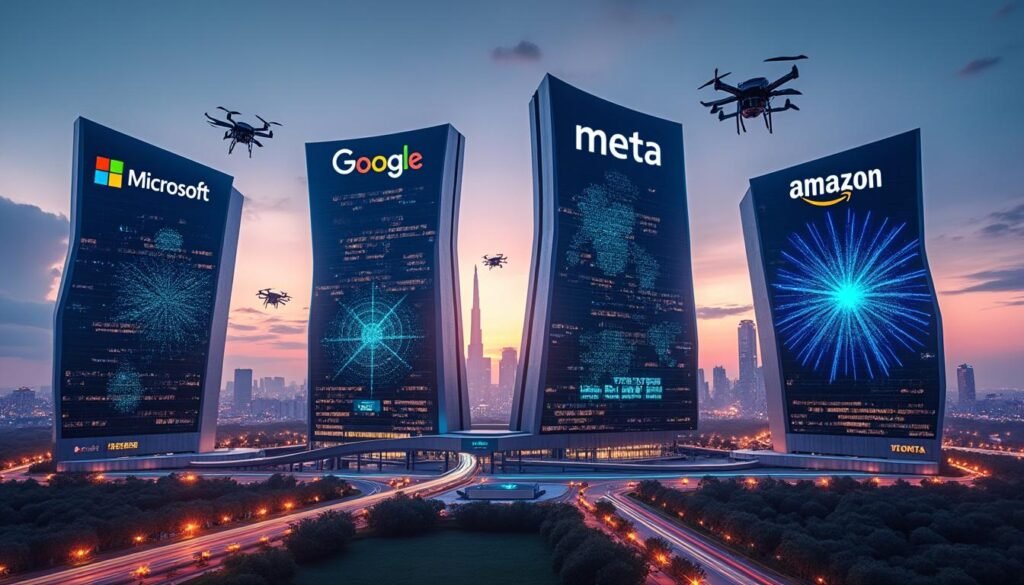
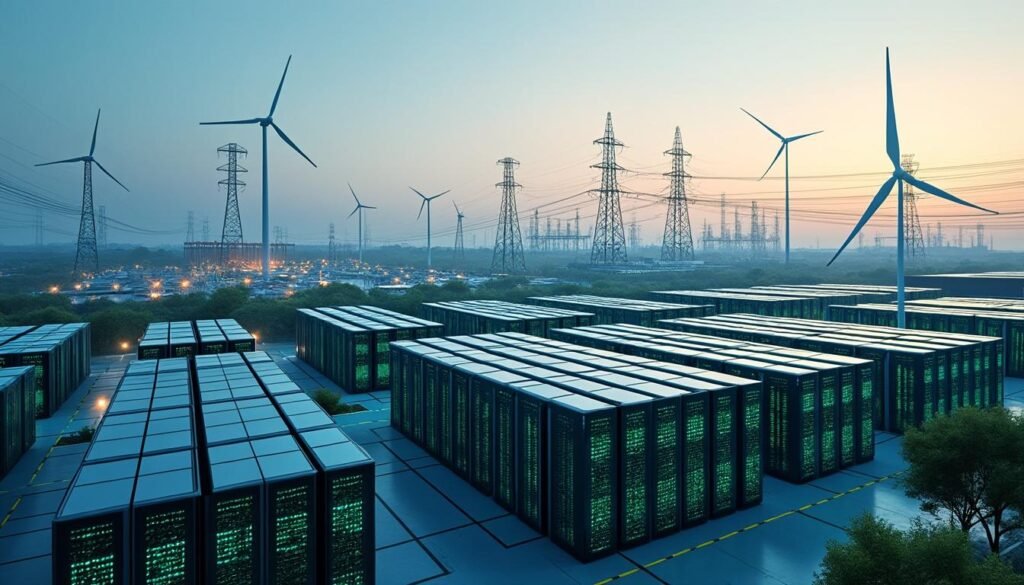

The cloud is a lie. Not a malicious one, but a brilliant piece of marketing that sold the world on the idea of immaterial data and weightless services. We tap, swipe, and stream from a digital universe that feels ethereal, clean, and infinite. The reality, however, is grounded in steel, concrete, and an astonishing amount of electricity. Behind every query, video call, and AI-generated image is a physical, power-guzzling server humming away in a colossal, windowless building. For decades, the giants of Silicon Valley—Google, Amazon, Microsoft, and Meta—presented themselves as software and logistics companies. But a quiet, seismic shift has occurred. Driven by an exponential demand for data and the dawn of generative AI, these tech titans have transformed into something else entirely. They have, without fanfare, become the world’s most sophisticated and powerful energy customers, and their next move is to become its masters.
This isn’t just about paying bigger electricity bills. It’s a fundamental pivot in corporate strategy, turning tech companies into de facto energy barons of the 21st century. Their insatiable hunger for power is now so vast that it dictates the development of national energy grids, warps local economies, and accelerates a global race to control the future of green energy. They are no longer passive consumers at the end of the line; they are actively building, funding, and shaping the energy infrastructure that will power the next century. This transformation from code-writers to power-brokers is happening largely out of public view, yet its consequences will redefine the intersection of technology, climate, and geopolitics. The battle for the future is no longer just about data or market share; it’s about who controls the terawatts.
The insatiable appetite of the digital world
To comprehend the scale of Big Tech’s energy thirst, one must abandon conventional metrics. We are no longer talking about the power needed for a city block, but for entire nations. A single hyperscale data center, the backbone of services like AWS and Google Cloud, can consume as much electricity as 80,000 U.S. homes. The International Energy Agency reports that data centers worldwide already account for over 1% of global electricity demand, a figure that is set to skyrocket. And the primary catalyst for this explosion? The artificial intelligence revolution.
Training a large AI model like GPT-4 requires a staggering amount of computational power, generating more carbon emissions than hundreds of transatlantic flights. Each query to a generative AI is estimated to consume many times more energy than a simple Google search. This has turned GPUs, particularly those from NVIDIA, into the most power-hungry components in the data world. This isn’t a temporary surge; it’s the new baseline. As AI integrates into every facet of our digital lives, the energy required to sustain it will push global power grids to their limits. The digital world’s appetite has become, for all practical purposes, infinite.
From simple consumers to global energy players
For years, tech companies were content to simply be large customers of utility companies. That era is over. Faced with volatile energy prices and the reputational risk of a massive carbon footprint, they made a strategic pivot: if you can’t rely on the grid, start building your own. This led to the rise of the Power Purchase Agreement (PPA), a long-term contract where a company agrees to purchase electricity directly from a renewable energy generator. Google, Amazon, and Microsoft are now the largest corporate buyers of renewable energy on the planet, single-handedly funding the construction of massive new wind and solar farms.
Their strategy goes beyond simply buying green energy. They are now deeply involved in energy innovation and markets.
- Direct investment in new renewable projects, essentially acting as venture capitalists for green energy.
- Funding for next-generation energy sources, including experimental nuclear fusion and enhanced geothermal systems.
- Development of sophisticated software to manage energy purchasing and distribution across global grids.
- Lobbying governments to deregulate energy markets to allow for more direct purchasing and grid integration.
These actions have effectively turned them from passive consumers into some of the most influential players in the global energy market.
Where the cloud touches the ground
The physical footprint of the digital world is reshaping geographies. Nowhere is this more apparent than in places like Loudoun County, Virginia, known as “Data Center Alley.” It is estimated that 70% of the world’s internet traffic flows through this single county. This concentration has turned the region into an economic powerhouse but has also placed an unprecedented strain on the local power grid. The local utility, Dominion Energy, has already warned that it may not be able to meet projected energy demands, a scenario that could halt further development.
This same story is playing out across the globe, from Dublin, Ireland, to Singapore. Tech companies are now in a constant search for locations with the holy trinity of fiber optic connectivity, cheap land, and, most importantly, abundant and reliable power. Their investment decisions can dictate the economic future of a region, giving them immense political leverage. They are no longer just asking for power; they are demanding that entire energy infrastructures be built around their needs, often prioritizing their own consumption over that of local communities.
The great green paradox of big tech
Big Tech is caught in a fascinating paradox. On one hand, no other industry is investing more in renewable energy. Their goal of running on 100% carbon-free energy, 24/7, is driving innovation and making green power more affordable for everyone. They are pioneering the use of technology to build a cleaner grid, with some projects exploring how artificial intelligence can optimize energy distribution and consumption.
On the other hand, their relentless growth and the energy demands of AI threaten to negate all these efforts. The sheer volume of new data centers being built means that even with massive green investments, their total consumption of fossil-fuel-generated power continues to grow in many regions. Furthermore, electricity is not their only environmental cost. The massive amount of water required to cool these server farms is putting a strain on water resources in already arid regions. The industry’s public image is one of clean, green innovation, but the physical reality is a constant and escalating battle against its own environmental impact.
Which tech company uses the most energy?
While companies are often secretive about exact numbers, Google and Amazon (through AWS) are consistently cited as two of the largest energy consumers in the world due to their vast global networks of hyperscale data centers. Microsoft and Meta are also major consumers.
Is cloud computing bad for the environment?
It’s complicated. Centralizing computing in efficient, modern data centers is often more energy-efficient than having millions of individual, inefficient on-premise servers. However, the sheer growth of cloud services and AI is driving an overall increase in energy consumption that poses a significant environmental challenge.
What is a Power Purchase Agreement (PPA)?
A Power Purchase Agreement is a long-term contract where a large energy user, like a tech company, agrees to buy electricity directly from a renewable energy producer, such as a new wind or solar farm. This guarantees the producer a buyer, making it possible to finance and build new green energy projects.
How is the AI boom affecting data center energy use?
The rise of generative AI is causing a massive surge in energy demand. Training and running large AI models require immense computational power from energy-intensive GPUs. This is currently the single biggest driver of new energy consumption growth in the tech sector.